Showing posts with label Tuti island. Show all posts

Wednesday, 12 November 2008

Exploring Tuti island - The island in the Nile River

English Teacher in Khartoum

Sudan 2008


I taught English as a second language in Khartoum during 2008. Sudan with its huge UN and other NGO presence is not really a popular holiday destination for anyone. I prefer working in these undiscovered developing countries where one can still find the real culture, unspoiled and untrampled by tourists and tour buses. I explored Khartoum mostly by foot, sometimes in searing heat, taking pictures for which I got arrested once. The president at that time Mohammed Al Bashir was indicted by the World Court for crimes against humanity. At that time civil war still existed between the North and the South, the oil-rich South seeking independence from the Arab North. 

The bridges across the Nile into Khartoum proper were perfect insertion points for the Southern rebels. I wanted to take pictures of the bridges, and other Khartoum street scenery, which was considered an act of espionage. Fortunately, after lots of prayers, I was released after my true identity was discovered. Hence taking pictures was quite a challenge for a snap-happy chappy like myself. To continue my obsession I had to devise plans not to be seen. Most of the pictures I took of bridges and other politically sensitive positions had to be done from the hip, like a gun-slinger.

Tuti island - across the river, Khartoum proper

About Sudan


Sudan (Arabic: السودان Al-Sudan) is the third largest country in Africa and sixteenth largest in the world, bordering Egypt, Eritrea, Central African Republic, Chad, Ethiopia, Libya, and South Sudan.  Sudan is afflicted by civil wars which have been raging, on and off, for more than 40 years. When the colonial map-makers divided up Africa, they included in Sudan the predominantly Muslim people of the north (including Nubians), who share much of their history and culture with Egyptians and Arabs, and the largely Christian and Animist Nilotic and Bantu people of the south, who have more in common with the rest of sub-Saharan Africa than with their northern neighbours (Wikitravel).

About Khartoum


Khartoum (Arabic: الخرطوم Al-Khartum) is the capital of Sudan and is located where the Blue Nile and White Nile Rivers merge. The huge, spread-out city is actually made out of three distinct cities (Khartoum, Khartoum North or Bahri, and Omdurman) which are divided by the Nile and its two arms. The Blue Nile flows between Khartoum and Bahri, the White Nile between Khartoum and Omdurman, and the merged Nile between Bahri and Omdurman. The confluence of the Blue and White Nile, known as Al-Mogran, lies just north of the bridge between Khartoum and Omdurman (Wikitravel). Divided by the Niles (Blue and White Nile, which confluence at Tuti island), Khartoum is a tripartite metropolis with an estimated overall population of over five million people, consisting of Khartoum proper, and linked by bridges to Khartoum North called (al-Kharṭūm Baḥrī ) and Omdurman (Umm Durmān ) to the west. (Wikipedia)

About Tuti island


Tuti Island (also spelled Tutti Island) is an island in Sudan where the White Nile and Blue Nile merge to form the main Nile. It is surrounded by the "Three Towns": Khartoum (the capital of Sudan), Omdurman (the largest city in Sudan), and Khartoum North (also known as Bahri, a large industrial center). Despite this, Tuti is home to only one small village (founded in the late 15th century), with grassland being the main makeup of the island. In the past, the only approach to Tuti Island was via several ferries that cross the river every so often, but now the Tuti Bridge, a modern suspension bridge, has been completed and can be used instead. Tuti Island is mainly agricultural and where Khartoum gets most of its supply of fruits and vegetables and therefore, you can find many farms situated all around the island, many of them still using manual methods of farming. You will find acres of green fields and lime groves. Its eight square kilometers (three square miles) of fertile land is covered in citrus orchards, vegetable farms, gorse hedgerows and narrow muddy lanes where donkeys and rickshaws are the main source of transport (Wikipedia).


Crossing the Nile from Khartoum to Tuti island

Crossing the Nile from Khartoum to Tuti island - the suspension bridge into Tuti

Sudanese ferry passengers

The Nile ferry that took us across

Sudanese truck at arrival point on Tuti island
Burj Al Fateh hotel in the background

Horse cart - Tuti island & Burj Al Fateh hotel across the Nile

My local guides and Raksha driver on Tuti island
 
Local fisher boy -Tuti island

My Raksha driver posing on an old 'rust bucket' with farmland in the background

Donkey car - Tuti island

Ferry arrival spot....not sure whether these goods were 'import' or 'export' goods

Ferry arrivals - Tuti island

On Tuti island

I took a ferry from Khartoum near the Burj Al Fateh hotel. The rust bucket took several with us....without life vests.....across the Nile. A Raksha driver approached me on the other side and offered to show me the island....for a price of course. Other Sudanese joined in to aid in the tour. I took some pics and a couple of hours later he took me to the ferry departure point. It was not expensive at all and I had a good couple of hours experiencing rural life.

Friday, 24 October 2008

The Khartoum Nile River & Nile bridges

English Teacher in Sudan 


Khartoum 2008


I taught English as a second language in Khartoum during 2008. Sudan with its huge UN and other NGO presence is not really a popular holiday destination for anyone. I prefer working in these undiscovered developing countries where one can still find the real culture, unspoiled and un-trampled by tourists and tour buses. I explored Khartoum mostly by foot, sometimes in searing heat, taking pictures for which I got arrested once. The president at that time Mohammed Al Bashir was indicted by the World Court for crimes against humanity. At that time civil war still existed between the North and the South, the oil-rich South seeking independence from the Arab North. The bridges across the Nile into Khartoum proper were perfect insertion points for the Southern rebels. 


I wanted to take pictures of the bridges, and other Khartoum street scenery, which was considered an act of espionage. Fortunately, after lots of prayers, I was released after my true identity was discovered. Hence taking pictures was quite a challenge for a snap-happy chappy like myself. To continue my obsession I had to devise plans not to be seen. Most of the pictures I took of bridges and other politically sensitive positions had to be done from the hip, like a gun-slinger.

Khartoum railway bridge - connects Khartoum proper and Bahri (Khartoum-North)

Nile sunset - near Nile street, Buri

About Sudan


Sudan (Arabic: السودان Al-Sudan) is the third largest country in Africa and sixteenth largest in the world, bordering Egypt, Eritrea, Central African Republic, Chad, Ethiopia, Libya, and South Sudan.  Sudan is afflicted by civil wars which have been raging, on and off, for more than 40 years. When the colonial map-makers divided up Africa, they included in Sudan the predominantly Muslim people of the north (including Nubians), who share much of their history and culture with Egyptians and Arabs, and the largely Christian and Animist Nilotic and Bantu people of the south, who have more in common with the rest of sub-Saharan Africa than with their northern neighbours (Wikitravel).

Khartoum & The Nile


Khartoum means "elephant trunk" in Arabic. Khartoum (Arabic: Al-Khartum) is the political capital of Sudan. The Three Towns: Khartoum, Omdurman, and Khartoum North—together comprise the political, commercial, and administrative centre for Sudan. Located where the Blue Nile and White Nile join to flow north toward Egypt, the capital city is the largest urban complex in Sudan  (encyclopedia.com). Khartoum is a metropolis with an estimated overall population of over five million people, consisting of Khartoum proper, and linked by bridges to Khartoum North called (al-Kharṭūm Baḥrī ) and Omdurman (Umm Durmān ) to the west (Wikipedia).  

The Blue Nile flows between Khartoum and Bahri, the White Nile between Khartoum and Omdurman, and the merged Nile between Bahri and Omdurman. The confluence of the Blue and White Nile, known as Al-Mogran, which confluence at Tuti island, lies just north of the bridge between Khartoum and Omdurman (Wikitravel).

Brickmaker on the banks of the Nile near my home on Nile street in Buri.
For exercise, I often ran along the banks of the Nile through agricultural land

Sunset cruise on the Nile for tourists and more affluent Sudanese

Agricultural Water pump on the banks of the Nile. Across the Nile, the ultra-rich living in villas of grandeur. 

Khartoum climate & agriculture


Khartoum is located in the semi-arid savanna belt of Sudan, with an average annual rainfall of 100-200 mm and a long dry season from September to June. A wide range of production systems can be found ranging from household subsistence to large-scale commercial farming. Crops grown in Khartoum state comprise a long list of vegetables, fruit trees, medicinal and aromatic plants, and field crops. In addition, intensive livestock production systems for milk, meat, and poultry are operational within and around Khartoum city. Khartoum state with its unique position at the confluence of the Blue and White Niles represents an ideal location for food production, which is fully oriented to satisfy urban demands (El Siddig et al)


Seasonal farmer and a vendor chatting on farmland adjacent to the Nile

Nile irrigation

Temporary housing for farm laborers working the land adjacent to the Nile. During the flood season they move elsewhere.

Taking a Nile bath after a hard days work

The land adjacent to the Nile during dry season. It floods every year, then the seasonal farmers make way for fishermen

Previously farmed, now being fished

Prior to the flooding

Nile during the flood season, taken from the roof of my villa

Nile farmland, with the 'Beverley hills' community across the Nile in the background - 
This green area floods during rainy season. Farming is thus seasonal.

Nile in flood at dusk

The Nile during the flood season, coming right up the Nile street corniche

Nile bridges


Sunset - Railway bridge 

Tuti bridge

Man walking on Nile street corniche with the old railway bridge in the background

Burri bridge

Nile sunsets


Buri - Khartoum

Buri - Khartoum

Buri - Khartoum

Buri - Khartoum

Ferry terminal

Ferry terminal

The Nile

The 'beach'


Khartoum 'beach' - Relaxing on the banks of the Nile

The 'Beach', a popular swim spot and relaxation area next to the Nile- near Buri

Tuti Island


Fishing boat - Tuti island, where White and Blue Nile rivers confluence.

The scenery on Tuti island - Tuti bridge & Burj Al Fateh hotel across the river in Khartoum


Monday, 1 September 2008

Living in Sudan

English Teacher in Khartoum

Social interaction


Sudan 2008


During 2008 I had the opportunity to teach English in Khartoum, Sudan. It is not exactly a popular tourist destination like Greece. Civil war between the North and South still existed. A huge UN presence in Khartoum to monitor issues in Darfur, made it a volatile situation. The president was at that time indicted by the World Court for crimes against humanity and the rebels attacked Khartoum at one point. One could not walk around like a tourist taking pictures of everything. There was a certain danger to everyday life. Yet I felt more secure and safe than in South Africa. You knew the boundaries and the do's and don’ts, whereas in SA the enemy is within. The locals in Khartoum are very hospitable and caring. They went out of their way to show kindness and provide help.

Again like in most African cities the divide between rich and poor is evident. Some had everything, some had nothing. Yet people showed no jealousy or envy, but rather a contentment. Due to the fact that much Non-profit Aid and relief organizations are involved with projects in Sudan, a huge foreign expat community exists. The UN, UNHCR, WFP, WHIO, UNICEF to name but a few employ a wide variety of workers with different nationalities. Parties, get-togethers, and clubs like in the days of colonialism exist to entertain and strengthen the camaraderie between expats in a faraway dangerous place. I attended some of these, but my impression was that these events only served to provide opportunities to get drunk legally.

As alcohol is forbidden in Islamic countries, bars and pubs exist to a limited extent, and then exclusively served expats. NGO expats got their drinks flown in on sanctioned UN planes to pass customs unnoticed. Eritreans supplied the locals need for booze. I was approached on a street by an Eritrean offering me a bottle of whiskey for USD 70. The illegal market in pornography and alcohol provides a constant supply for the great demand. It is said that there are more alcoholics in Islamic countries than anywhere else. More affluent Arab men are huge consumers of sex tourism in Thailand and China. There are sex hotels in Dubai specifically to cater to this need. In Afrikaans, we have a saying "bo blink, onder stink", which means that on the outside people are all pious and holy, yet on the inside they are rotten........ 'White-washed tombs'. Double standards of foreign expat workers who came to 'help' but in reality fled away from their countries to pursue illegal activities legally, also existed. The locals hated the UN and all its sister organizations.

Petroleum companies from China also invaded Sudan to exploit this valuable commodity. One of my functions was to improve these employees' English. As a minority group living in compounds, they were quite eager for friendship. As I worked in China for 3 years, I could speak reasonable Chinese and they took me in and made me part of some extracurricular activities. In the poor areas, you had street food and sidewalk tea, while in more affluent areas you had 'Beverley Hills' style coffee shops and restaurants which catered for the upper crust expats and locals. I loved the spontaneity and friendliness of the poorer classes, which made you feel welcome and accepted. The upper crust entertainment venues filled with expat snobs made you feel like the cat dragged you in.

Not all expats were there for the wrong reasons, I went to church there and met Christians who were trying to erase the bad image of expats within the community. I had friends within all these different groups of people and it gave me great insight into the make-up of Khartoum, truly a city of contrast and variety.

Exploring Bahri - posing with locals

Exploring Tuti island - Khartoum

About Sudan


Sudan (Arabic: Al-Sudan) is the third largest country in Africa and sixteenth largest in the world, bordering Egypt, Eritrea, Central African Republic, Chad, Ethiopia, Libya, and South Sudan.  Sudan is afflicted by civil wars which have been raging, on and off, for more than 40 years. When the colonial map-makers divided up Africa, they included in Sudan the predominantly Muslim people of the north (including Nubians), who share much of their history and culture with Egyptians and Arabs, and the largely Christian and Animist Nilotic and Bantu people of the south, who have more in common with the rest of sub-Saharan Africa than with their northern neighbours (Wikitravel).

About Khartoum


Khartoum (Arabic: Al-Khartum) is the capital of Sudan and is located where the Blue Nile and White Nile Rivers merge. The huge, spread-out city is actually made out of three distinct cities (Khartoum, Khartoum North or Bahri, and Omdurman) which are divided by the Nile and its two arms (Wikipedia). 

The Three Towns—Khartoum, Omdurman, and Khartoum North—together comprise the political, commercial, and administrative center for Sudan. Located where the Blue Nile and White Nile join to flow north toward Egypt, the capital city is the largest urban complex in the country. Khartoum, the political capital, means "elephant trunk" in Arabic (encyclopedia.com).

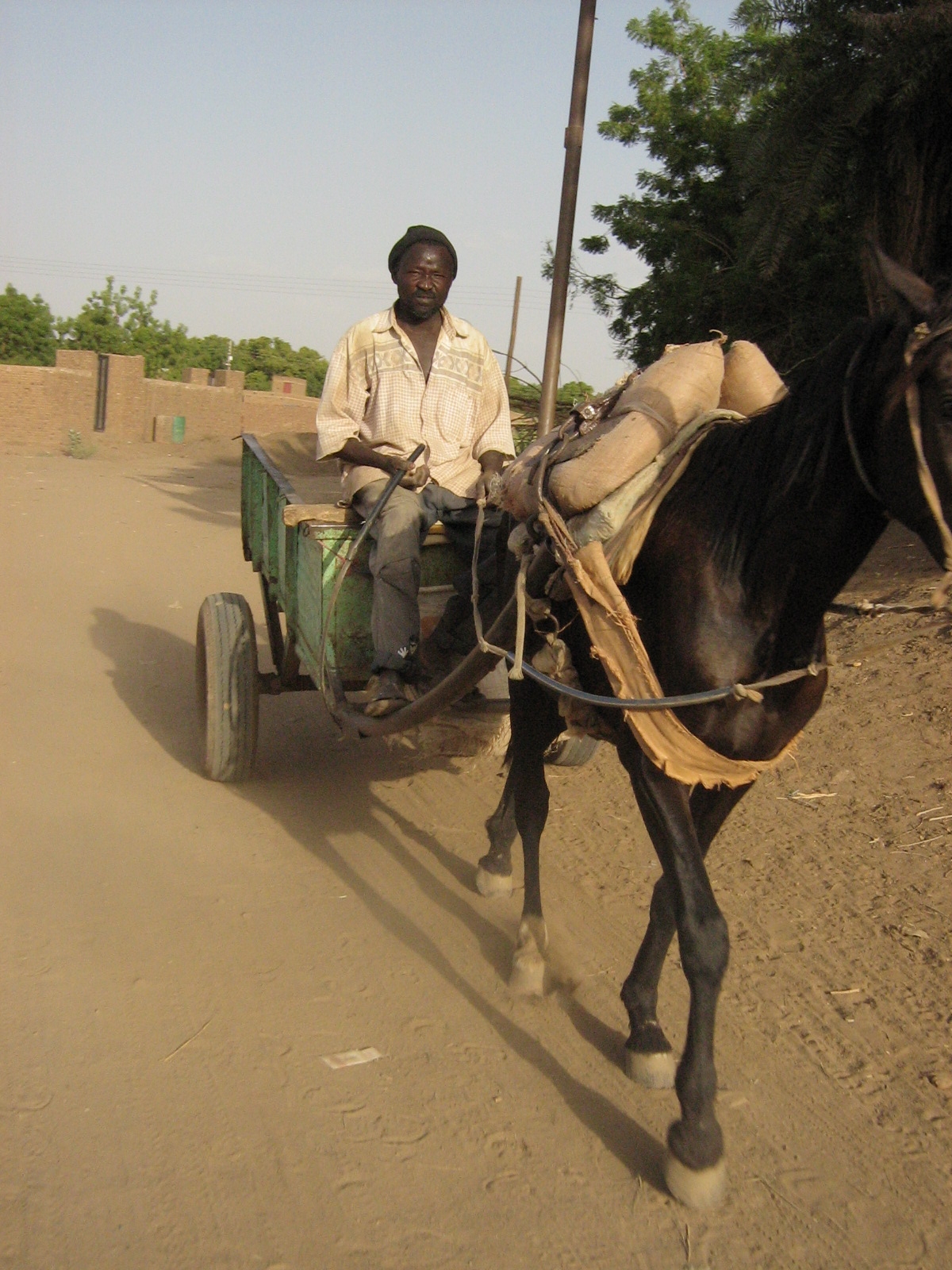
As I was walking around my neighborhood, Buri, this group of teenagers passed me in their horse cart. 
They invited me for a ride and I did a photo shoot. Content with so little was my impression of them.
On the other hand, you had many expats with lots complaining all the time

Al Salam Rotana hotel in Khartoum.
My Chinese students had a membership of the club and invited me a couple of times along

Relaxing next to the pool

One of my Chinese students relaxing next to the pool

William Guo, one of my students - Rotana hotel

An English doctor I met and befriended

'High tea' - Sudan style

Sandra, a colleague, and friend relaxing at home

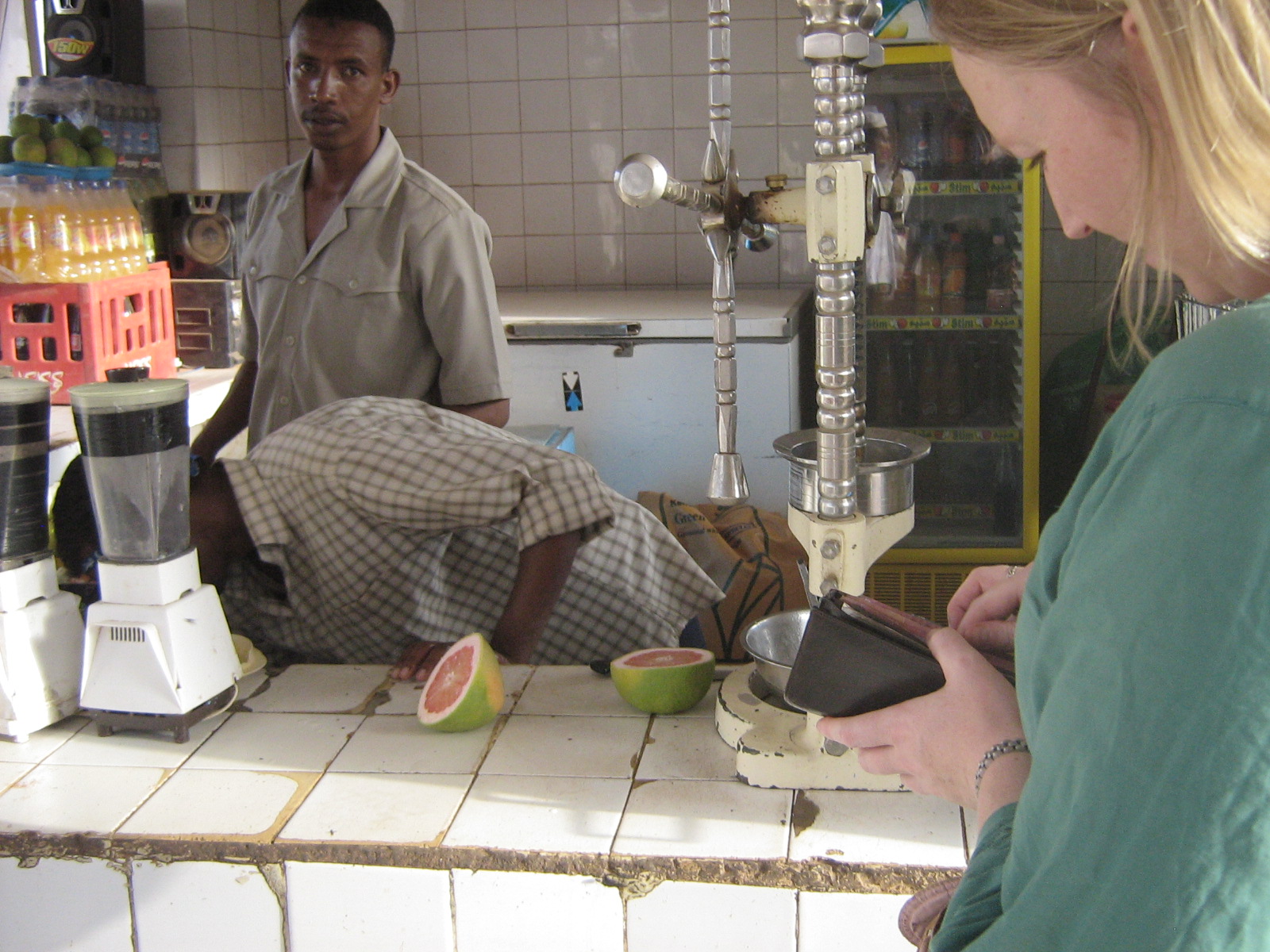
Buying fruit juice - Khartoum-North souq with Justine

My guide - Sandra, organizing a Raksha for us

At a Syrian restaurant with colleagues, friends, and students

Baklava treat at a Syrian restaurant

The Syrian restaurant menu

The Schwarma's at the Syrian restaurant was the best in Khartoum

A Sudanese man who gave me a lift once and took me to his home for tea

The Beatles coffee shop - Ate here a couple of times

With Sudanese teens during a summer camp we held