Friday, 24 February 2006

Nanning, the Green city

Weekend in Nanning

The capital of Guangxi province, China 

February 2006

Nanning (Chinese: 南宁; pinyin: Nánníng) is the capital of the Guangxi Zhuang Autonomous Region in South-Western China. It is known as the "Green City" because of its abundance of lush tropical foliage (Wikipedia).


On Nanning's Nanhu lake 


Southeast of Nanning city, the 126.6-hectare Nanhu Park (South Lake Park) is a peaceful retreat to take a stroll in. Three-fourths of the total park area is taken up by lakes, which are surrounded by palm trees.

Taking a break from paddling the boat

Paddling boats on Nanhu lake

This man begging for food and money

Posing with Chinese locals in Nanning's Nanhu lake park

Ron's girlfriend, Dong, who hails from Nanning, took us to this communist monument.

Qingxiu park


The Qingxiu mountain range is the 'green lung' of Nanning City. Located 5 kilometers (about 3.1 miles) southeast of the suburbs of the city and bordering the Yongjiang River, the mountain range is renowned for its beauty and the clear waters which run through it. It is no wonder they are counted as one of the Eight Wonderful Sceneries of ancient Nanning. The undulating chains of mountains, verdant trees, liquid springs, and historic sites together make this mountain a good place to meet the charm of antique taste and tranquillity (Travelchinaguide: online).

Mt Qingxiu park

Dong and Conchi at a scenic spot in Mt Qingxiu park

Nightmarket outing


Butchered dogs for sale at a night market stall in Nanning. 
It is true, people in Southern China do eat cats and dogs. 

A blind Night-market musician playing multiple instruments

Night market food for sale - seafood & kebabs

seafood

Catch your own food

Huge shrimps

Nanning street scenery - Shoe shining taking place near the entrance of our hotel

At the end of our stay, we headed back to Liuzhou where we were working as English teachers at a College.


Tuesday, 31 January 2006

The ancient Longji Rice terraces

Guilin to Ping'An village & Longji rice terraces

Longsheng County, Guangxi province, China 


January 2006


Conchi, a Spanish ESL colleague of mine in Liuzhou, and I took a bus from Liuzhou to Guilin, where we spent the rest of the day and evening exploring Guilin. The next day, we went to the bus station in Guilin to take another bus to the Longsheng Rice Terraces, about 80 km away on winding mountain roads, that took more than two hours to reach. We spent a couple of days at one of the Longsheng Rice Terrace villages, named Ping'An, taking pics of the village and the surrounding ancient Rice Terraces, still being cultivated to this day. The weather did not play along and most of the time the scenery was locked away in mist and rain, which to an extent, together with the wooden structures of the village, did create a memorable experience.

Guilin is a city in Guangxi Province in South-Western China. It's known for its dramatic landscape of limestone karst hills. At its center are 2 lakes, Shanhu (Cedar) and Ronghu (Banyan), remaining from a medieval-era moat that once surrounded the city. Boats travel through these and other lakes via connected rivers. It is a very popular tourist destination. There are river cruises on the Li River from Guilin to Yangshuo, which is known for its bamboo rafting.


Downtown Guilin

Night view of a canal in Guilin

Xi river flowing through Guilin


Guilin to Longsheng


Whilst having to wait for our bus, we ate lunch at this street food cafe near the bus station in Guilin, so I took some pics how a typical street food cafe looks on the inside and what kind of food they serve. This, of course, was local cuisine unique to Guangxi province, but I worked in 6 vastly different provinces across China, and there is not much difference how they look with regards to interior decoration.
Guilin - Typical Chinese 'fast food' or street food at the bus stop, 
just before Conchi and I left for the Longji rice terraces

Guilin - A street food restaurant kitchen at the bus station where we took our bus to Longsheng

Guilin - A street food restaurant kitchen at the bus station where we took our bus to Longsheng rice terraces

Spicy Noodle soup being prepared

The bus we took from Longsheng to Ping'An village and the Longji rice terraces

It was about a two-hour bus ride from Guilin to the Rice Terraces, winding up mountain roads to reach the Rice Terraces.

Longsheng


Longsheng Various Nationalities Autonomous County is a county of Guangxi, China. It is under the administration of Guilin city (Wikipedia).

Longsheng/Longji rice terraces


The Longsheng Rice Terraces, also called The Longji Rice Terraces are found 23 kilometers out of Longsheng, and about 100 kilometers from Guilin and is the most famous rice terraces in China. Covering an area of 66 square kilometers, these rice terraces were first built in the Yuan dynasty and completed in the Qing dynasty by Zhuang people, making them over 700 years old. The terraced fields are built along the mountain slopes winding from the riverside right up to the peaks, reaching elevations of up to 885m. Nestled right next to the rice paddies is the town of Ping'An, built in its totality of wood.

Ping'An village


The Longji Terraced Fields consist of three main villages – Jinkeng Red Yao Village, Ping'an Zhuang Village and Longji Ancient Zhuang Village. When talking about Longji Terraced Fields, it is generally considered to be Ping'an Terraced Fields, the core tourist area of Longji Terraced Fields. Ping'an Zhuang Village accommodates more than 50 families with over 200 people. Most of them are Zhuang people and some are Yao people. The Zhuang minority nationality is the main nationality in Guangxi Zhuang Autonomous Region. One-third of the population in Guangxi is comprised of the Zhuang people. 

The Yao people in the village are distinctive from the other residents because of their hair. All of the Yao women in the village have long hair; with the longest being over two meters. Huangluo Yao Village, which is on the way to the Ping'an parking lot, was listed in the Guinness World Records as the "World's First Long Hair Village". It is said that all of the Yao women in the village only cut their hair once during their lifetime and that's when they become adults (18 years old) (Chinahighlights: online).
The Zhuang people in their traditional clothes assist tourists on the trip

From where the bus stopped we had to hike a distance to the actual village situated among the Longji Terraces. We were taken to Ping'An village, one of the three villages that formed part of the Longji Rice Terraces. We stayed a couple of nights in one of the wooden structures that served as a hotel.

The Zhuang village of Ping'an, 
now with many Guesthouses where one can overnight. 

As stated before, Ping'An village is part of the Longji terraces and one can easily hike from there to explore the Rice Terraces, which surround the village.

Ping'an village 

Ping'An village scenery

Longji rice terraces 

Longji rice terraces


Ping'an village

Vantage point - The access route to Ping'an village from the bus stop

The vantage point covered in mist

Progress ... a wooden structure being constructed

Conchi Saez, a friend and colleague, from Spain.
In the Guesthouse where we stayed at in Ping'An


 Longji rice terraces

 Longji rice terraces

Rice shoots still being planted on the same terraces constructed 700 years ago

Posing in Ping'an village
It was a cold and misty stay in Ping'An. It was a unique experience staying in the guesthouse constructed out of wood. All the buildings were wooden structures. The Zhuang people in traditional wear with their long hair and the ancient winding rice terraces made this a memorable trip. However, January is not an ideal time of year to experience this and take good photos. Still, memorable in the sense that one was able to stay with the villagers in an authentic setting, that has been there for centuries, still functioning the same way it did for more than 700 years. 

When in Southern China, this should be on your bucket list of what to see and what to do. Don't join an organized expat tour group. Instead, go to the local bus station in Guilin and take a public bus that caters for the Chinese locals and tourists. That way your experience will be much more authentic.

Friday, 30 December 2005

Teaching and living in Wuhu

English Teacher in China

September 2005 - December 2005


In 2005, I taught ESL (English as a Second language) at the Traditional Chinese Medicine College in Wuhu, Anhui province, China for a 4 month period. I left South Africa in June of 2003 to go and teach ESL in Taiwan. I stayed for 18 months in Taiwan and then decided to experience mainland China too. 

I stayed a period of 19 months in China, mainly working for one company called Delter-Telford International Business Institute. I was fortunate to move around China with Delter, staying and teaching in four different provinces: Nanjing, Wuhu (Anhui), Liuzhou (Guangxi)  and lastly Shanghai.

Anne (Canadian) and I were the only expat teachers at the Chinese Medicine College in Wuhu. We lived on campus in small apartments just below the men’s hostel. We could eat our meals at the Cafeteria on campus, but after I ate dog meat accidentally, I tried other options. It was winter in Wuhu at that time and Anhui being an impoverished province, campus made for a sad and depressing scenery. I had wonderful students. I had a class of nurses who taught me to speak Chinese and took me on outings in and around Wuhu to do sightseeing. One of these trips they booked a mini cruise for us on the Yangtze River. 

I also had a bicycle which I sometimes took out for a spin to take pictures of the countryside. Anne, an elderly lady, and I had a standing Saturday morning arrangement to go and eat at a restaurant in Wuhu. I also travelled during my stay in Wuhu, and visited tourist destinations in Anhui province, such as Huangshan (Yellow Mountain) and the ancient villages of Hongcun and Xidi. During my stay in Wuhu, I also undertook a tour of the North-Eastern part of China, including places like Qingdao, Liu Gong island, Yantai and Dalian. The photo expose will paint a clear picture of life in Wuhu and the wonderful experiences I had.

Wuhu street scenery

Chinese chess - Wuhu

About China


China, officially the People's Republic of China (PRC), is a unitary sovereign state in East Asia. It’s the world's most populous country, with a population of over 1.381 billion. The state is governed by the Communist Party of China and its capital is Beijing. It exercises jurisdiction over 22 provinces, five autonomous regions, four direct-controlled municipalities (Beijing, Tianjin, Shanghai, and Chongqing) and two mostly self-governing special administrative regions (Hong Kong and Macau). It also claims sovereignty over Taiwan. The country's major urban areas include Shanghai, Guangzhou, Beijing, Chongqing, Shenzhen, Tianjin, and Hong Kong. It covers approximately 9.6 million square kilometers. 

China is the world's second-largest state by land area and either the third- or fourth-largest by total area, depending on the method of measurement. China has a vast and diverse landscape, ranging from the Gobi and Taklimakan Deserts in the arid north, to subtropical forests in the wetter south. The Himalaya, Karakoram, Pamir, and Tian Shan mountain ranges separate China from much of South and Central Asia. 

The Yangtze and Yellow Rivers, the third- and sixth-longest in the world, respectively, run from the Tibetan Plateau to the densely populated eastern seaboard. China's coastline along the Pacific Ocean is 14,500 kilometers long (Wikipedia).

Wuhu Taxi tuk-Tuks


About Wuhu


Wuhu (literally "Weedy Lake") is a prefecture-level city in south-eastern Anhui province, of China. Sitting on the south-east bank of the Yangtze River, Wuhu borders Xuancheng to the southeast, Chizhou, and Tongling to the southwest, Hefei to the northwest, Ma'anshan to the northeast, and the province of Jiangsu to the east, and is approximately 90 km south-west of Nanjing. Its population was 3,545,067 inhabitants at the 2010 census whom 1,264,539 in the built-up (or metro) area. 

Wuhu is known to have been inhabited since at least 770 BCE. It became a strategically important town during the Three Kingdoms period (220-280 AD) when it was controlled by the Eastern Wu. Under the Ming dynasty, Wuhu developed into a major commercial center and river port and since that time has been known as a center of the rice trade. The city is the second largest economy in Anhui, after Hefei, the provincial capital. In 2015, Wuhu’s GDP reached RMB 245.7 billion (Wikipedia).

Teaching in Wuhu


Group photo - with my Business-English students

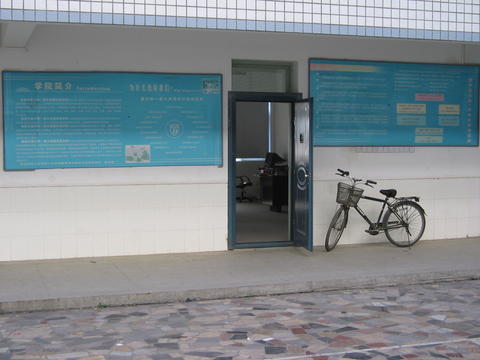
College campus

Men's hostel on floors above my apartment

Entrance to my apartment at the bottom floor of the male hostel

Garfield, Anne's cat

Campus scenery

The street where college is located

The opening ceremony of the new sports stadium - Wuhu

Campus show

Entrance to our offices

My students

Rex - one of my Chinese English teaching colleagues

Campus scenery

The main entrance to College

Campus scenery

With my students....I'm the only non-Chinese

May and Mary

Dinner at Anne's - Garfield on my lap

Campus activity

Exploring Wuhu city


Downtown Wuhu

Central shopping district - Wuhu

Central lake - Wuhu

Central park - Wuhu

Central park - Wuhu

Street market adjacent to Canal - Wuhu


Street market adjacent to Canal - Wuhu

Street market adjacent to Canal - Wuhu


Street vendor - Wuhu

Wuhu accommodation

Just the two of us

Wuhu streets

Wuhu streets

Rural China - near Liuzhou

Wuhu Fruit and veg market with fruit & veg garden

Wuhu streets near the port area

Wuhu lake restaurant flotillas

Wuhu cyclist

Charcoal delivery - Wuhu

Wuhu street scenery

Apartment block - Wuhu

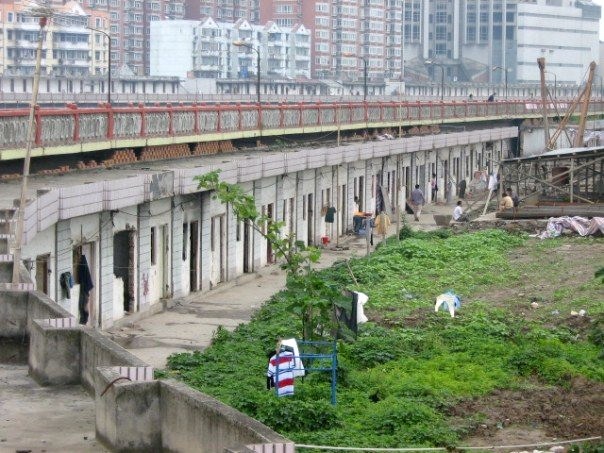
Impoverished community - Wuhu

Impoverished community - Wuhu

Central park - Wuhu

Central shopping district - Wuhu

The Yangtze & Wuhu canals


Canal walkway/corniche


View of the surrounding area - taken from main Canal walkway/corniche


Canal walkway/corniche

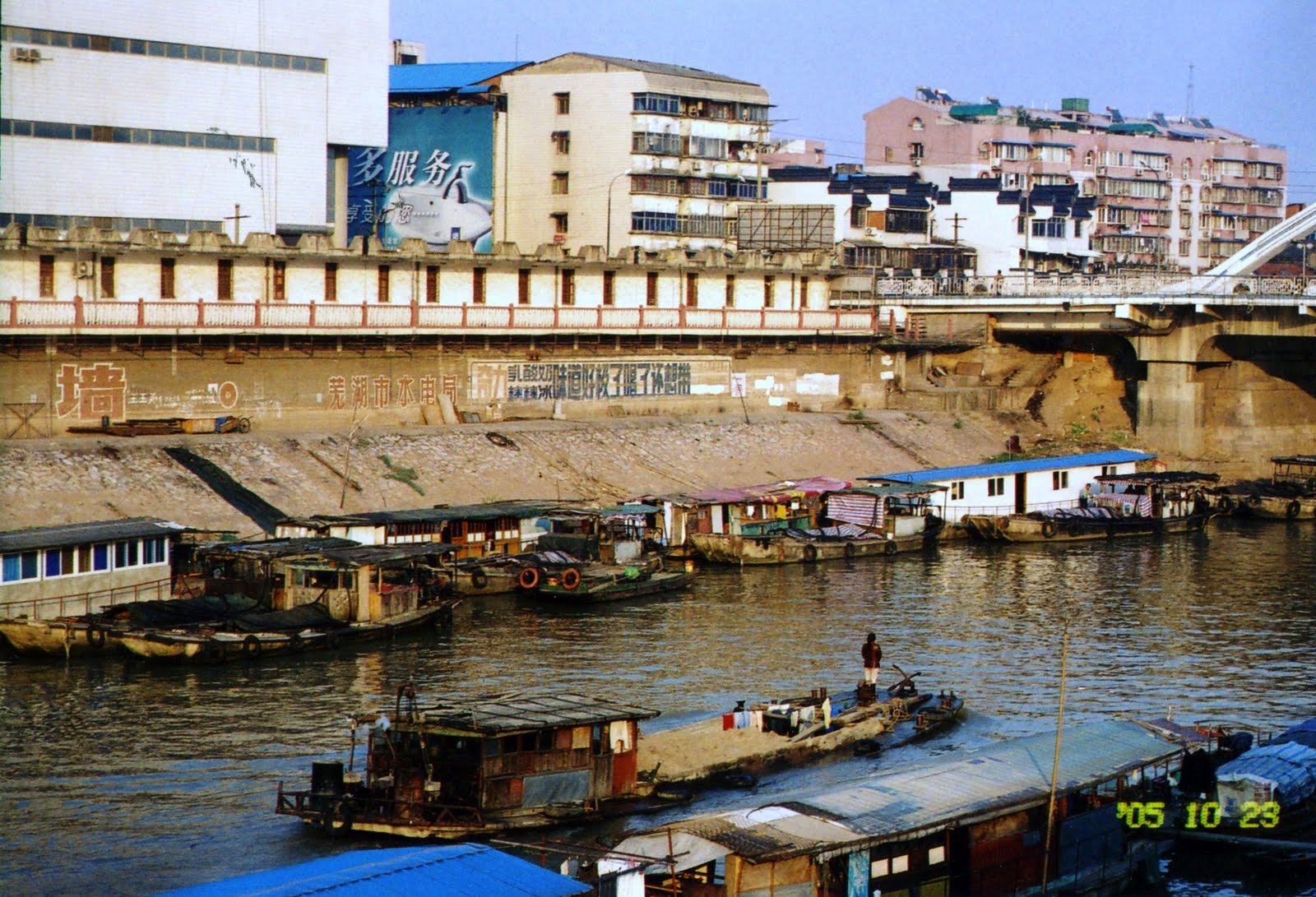
Yangtze River barges - Wuhu

Yangtze River canal - Wuhu

Yangtze river boats - Wuhu port

Yangtze river boat - Wuhu port

Yangtze river boat - Wuhu port

Yangtze river community - Wuhu port

Yangtze river boats - Wuhu port


Canal scenery


Main canal - Wuhu


Main canal

Canal boats - Wuhu

Canal boats - Wuhu

Canal scenery - Wuhu

Canal boats - Wuhu

Canal boat cook - Wuhu

Main canal - Wuhu

Main canal - Wuhu

Canal boats - Wuhu

Canal boats - Wuhu

Canal boat - Wuhu

Canal boats - Wuhu

Canal boats - Wuhu

Canal boats - Wuhu

Outings with Students


Two of my students on a boat we took for a cruise on the Yangtze


Sunset on the Yangtze - near Wuhu


Bitterly cold


My students

On the banks of the Yangtze


Xuancheng

About Xuancheng


Xuancheng is a city in the southeast of Anhui province which was founded in 109 BCE. It has Xuancheng has over 2,000 years of history. It is located in the lower Yangtze River drainage basin and Yangtze River Delta, and it borders Wuhu to the northwest, Chizhou to the west, Huangshan to the southwest, and the provinces of Zhejiang and Jiangsu to the southeast and northeast respectively (Wikipedia).

Xuancheng - Street market

Xuancheng - Street scene

Xuancheng - Street scene

Xuancheng - Street scene